Practical guides for noticing, collecting and editing
Start with the cover guide, then work through a section at your own pace.
Start hereObserving
A one-week drawing journal
Ten minutes a day drawing the same object, for seven days, is the quickest way to learn to see it. The routine, the three things to note, and how to take the best drawing onto a print block.
In this guide · 5 steps · 2 min
Guides by section
Observing
Learning to see an object, a surface or the light on it before you start making.
A one-week drawing journal
Ten minutes a day drawing the same object, for seven days, is the quickest way to learn to see it. The routine, the three things to note, and how to take the best drawing onto a print block.
Reading hard and soft light outdoors
How to tell whether light is hard or soft before you start drawing or photographing, and what each does to shape, texture and color.
Working by lamplight at the end of the day
When daylight goes, a desk lamp becomes the only light on your work. A short routine for placing it, checking color and knowing when to stop.
Collecting
Reference photographs, notebooks, tools and a library you can search.
Build a reference library you can search in ten seconds
One inbox, three folders, a naming rule and a weekly ten-minute review turn a pile of saved images into a reference you actually use.
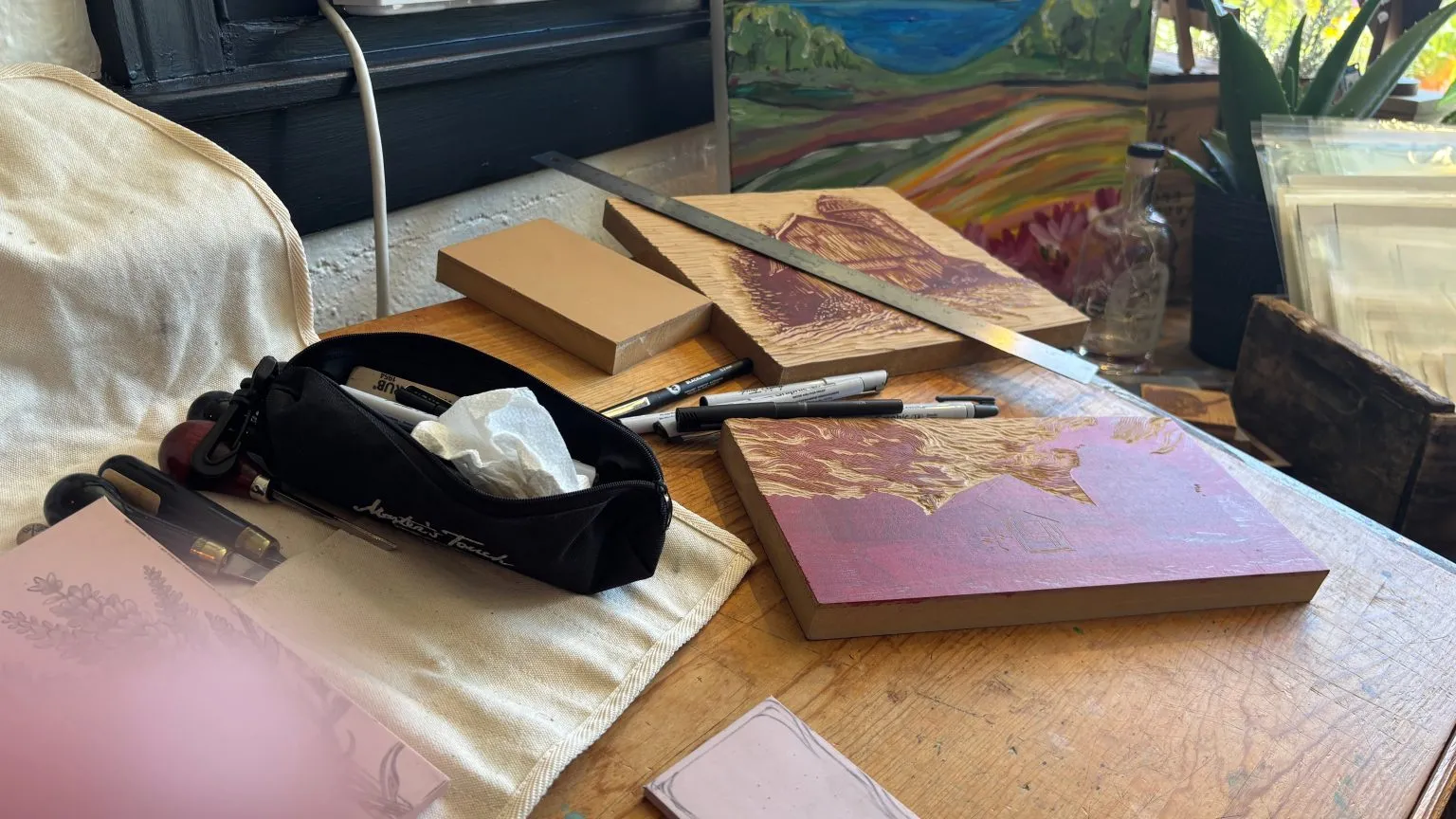
Photograph your tools as reference
Tools and materials make good reference because they hold still. How to photograph a desk or a set of tools so the pictures are useful when you draw, repair or restock later.
Keep field notes you can use a year later
A field note is useful when a stranger could follow it. Four lines to write on the spot, and one to add at home.
Editing
Choosing, ordering and captioning what you made.
Edit twelve frames into a sequence
From a day of photographs to a sequence of twelve: see everything at once, make a fast first cut, choose an opening and pace the middle.
Write captions that add information
A caption should tell the reader something the picture cannot. A describe-then-delete method, with before and after examples.
Field notes
Short notes written on the spot.